Advanced Case Management
EQS Group
EQS is a global provider of Governance, Risk, and Compliance software, and the highest value product is the whistleblowing tool, Integrity Line. The primary goal of this tool is to provide a secure and trustworthy platform for current and former employees to report cases of misconduct directly to their employer, and additionally help these complex organizations process those cases more efficiently and transparently, overall reducing risk to the business and creating a healthier culture.
The main users of a product like this are internal case managers and they face three primary challenges while trying to run investigations on incoming whistleblowing cases.
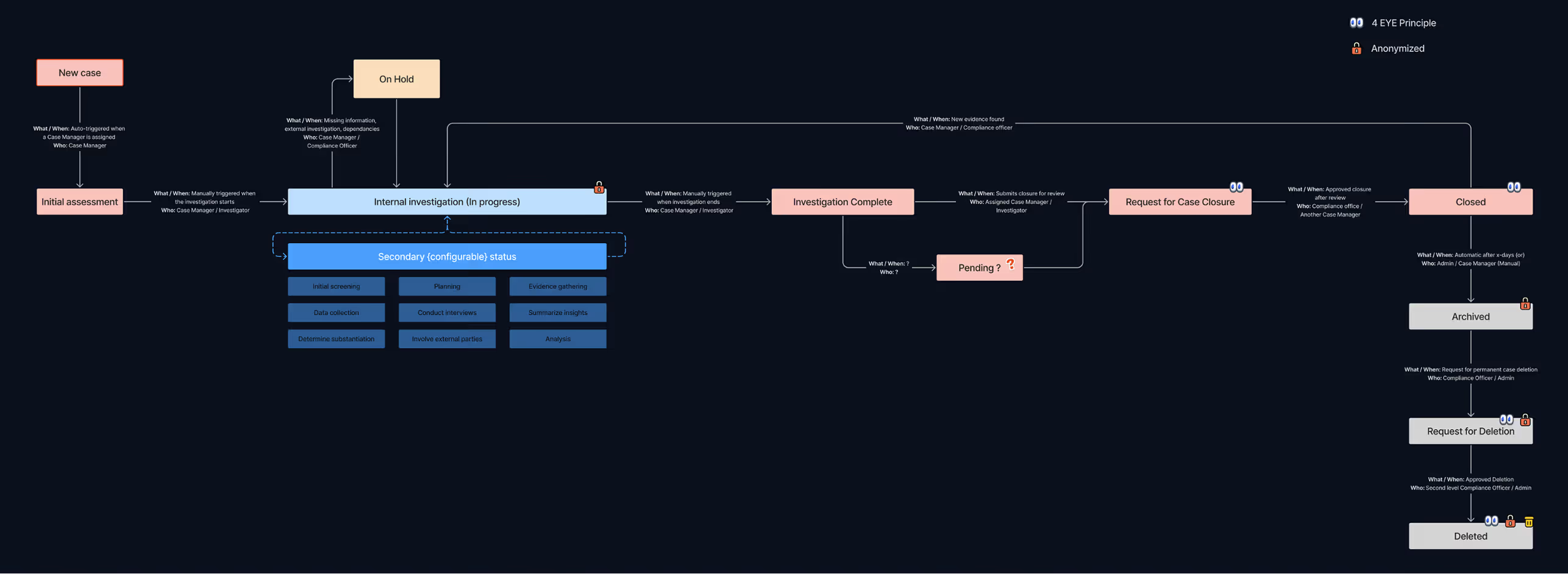
The basic lifecycle of a case begins at intake, followed by an initial assessment. Once determined that the case has grounds, the investigation kicks off. A case could sit in progress for months or years, depending on the allegation, people involved, complexity, and more. After a conclusion is reached, closure procedures follow.
The whistleblowing product team had 4 designers, ~30 engineers, and 3 product managers. I was responsible for leading this little design group, delegating work based on skills and personal career goals, defining our UX roadmap, and ensuring a high level of craft. As staff designer, I was accountable for the quality of everything that was shipped.
We went through many rounds of iteration → testing → feedback → repeat. To continue pushing the concept forward we spoke with a dozen or more clients, digging into their processes, pain points, and needs for case management. This work highly influenced the outcome of our concept, and concurrently helped me activate our UX research program, getting research support hired, processes documented and shared, and more.
I facilitated multiple design sprint workshops, bringing together about a dozen people across functions, leadership, and teammates. With this workshop, we not only wanted to harmonize a handful of similar features but create a first-of-its-kind case management tool.
During the workshop week we quickly iterated in low and mid fidelity, even landing a customer interview near the end of the week to dive deeper into their needs. Our assumptions were clearly documented for us to research later. Often, workshop outcomes are left on the whiteboard and never really realized. Luckily that was not the case with this project!
The current whistleblowing product supports receiving and assessing a new case, and conclusion procedures well enough, but there’s a giant middle section with lots of room for improvement; the investigation processes of a whistleblowing case. Our case management concept focuses in on this area, enabling companies to configure their already existing processes directly into the tool, then dynamically apply them to the cases as they come in.
This new vision consists of three parts:
1. It must be structured yet flexible – Enabling clients to create custom investigation procedures, standardized company-specific outputs, and process templates for an efficient investigation lifecycle.
2. It must be designed for real investigators – The people who handle these investigations want to add evidence and documentation on the fly, launch new threads oof inquiry, and communicate and collaborate inside the tool.
3. Lastly, it of course must be built for AI – AI agents are already here, so our platform must be ready. We want to create a foundation upon which to build AI summaries and insight generation, auto-tagging, smart transcripts, dynamic interview assistants, and much more.
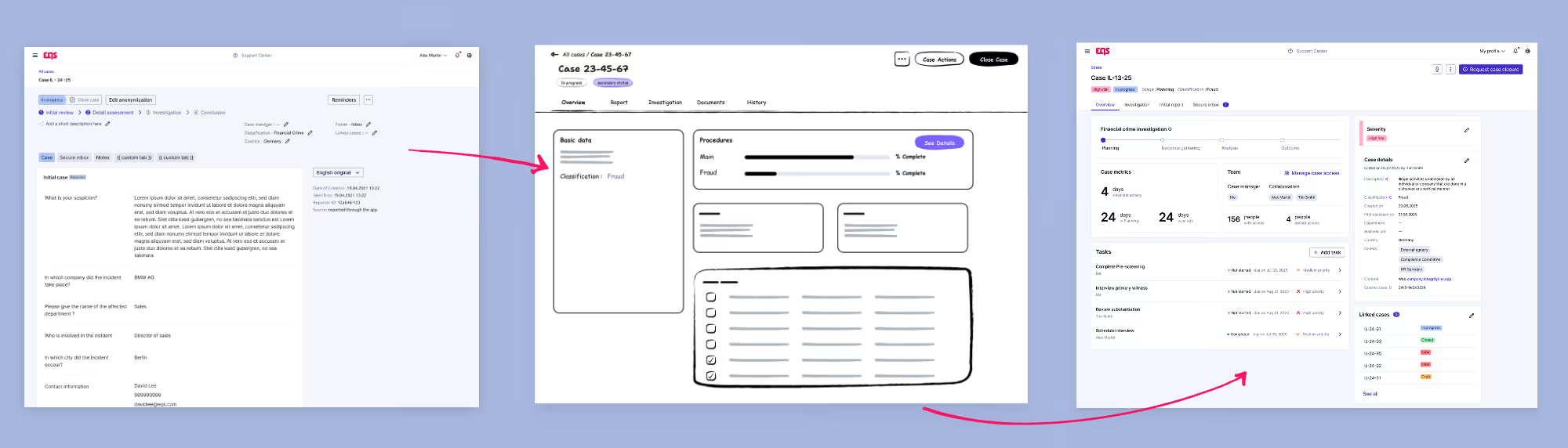
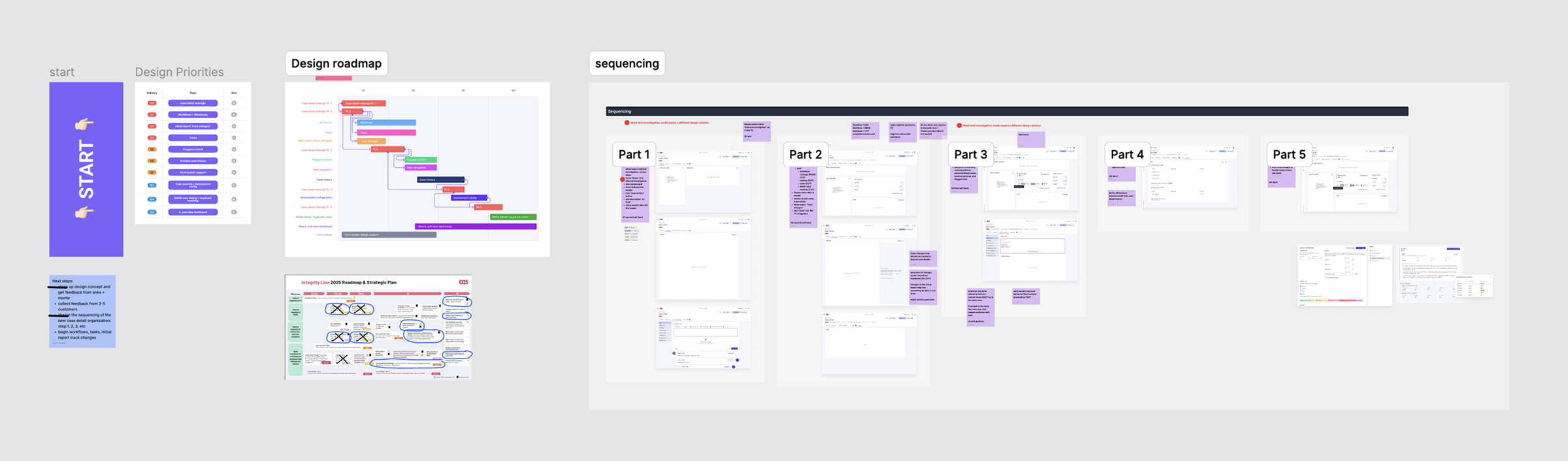
Workshop outcomes, showing the design process and future vision of the case detail.
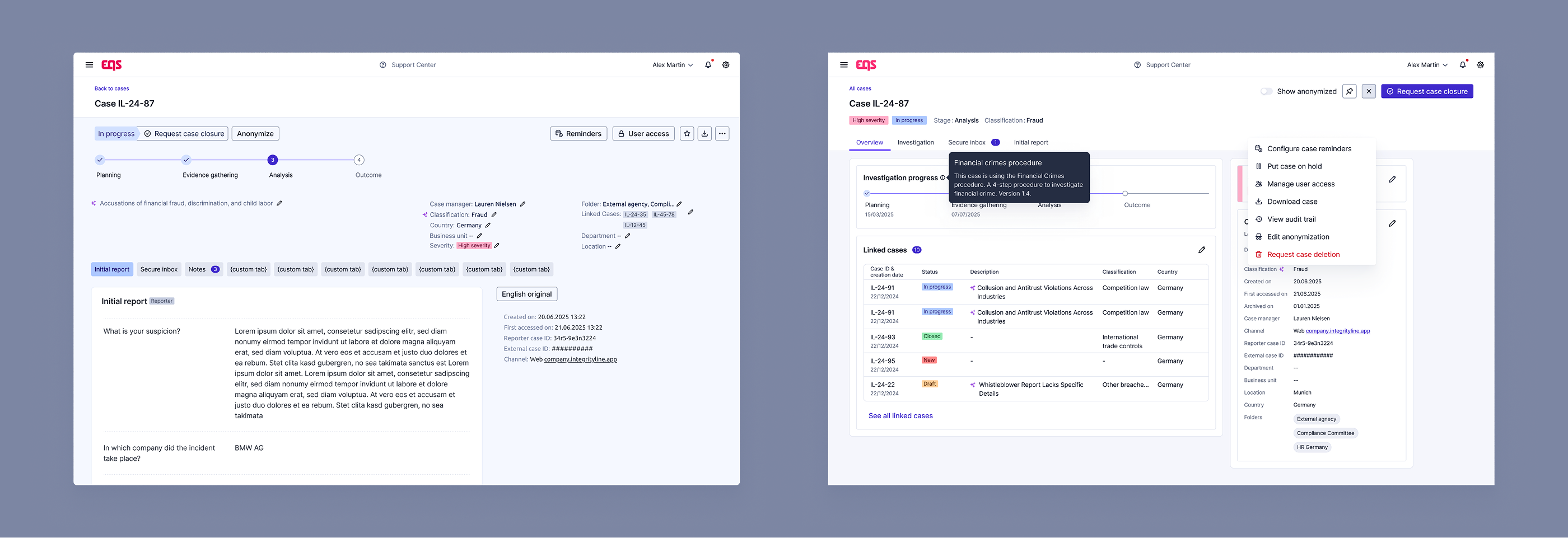
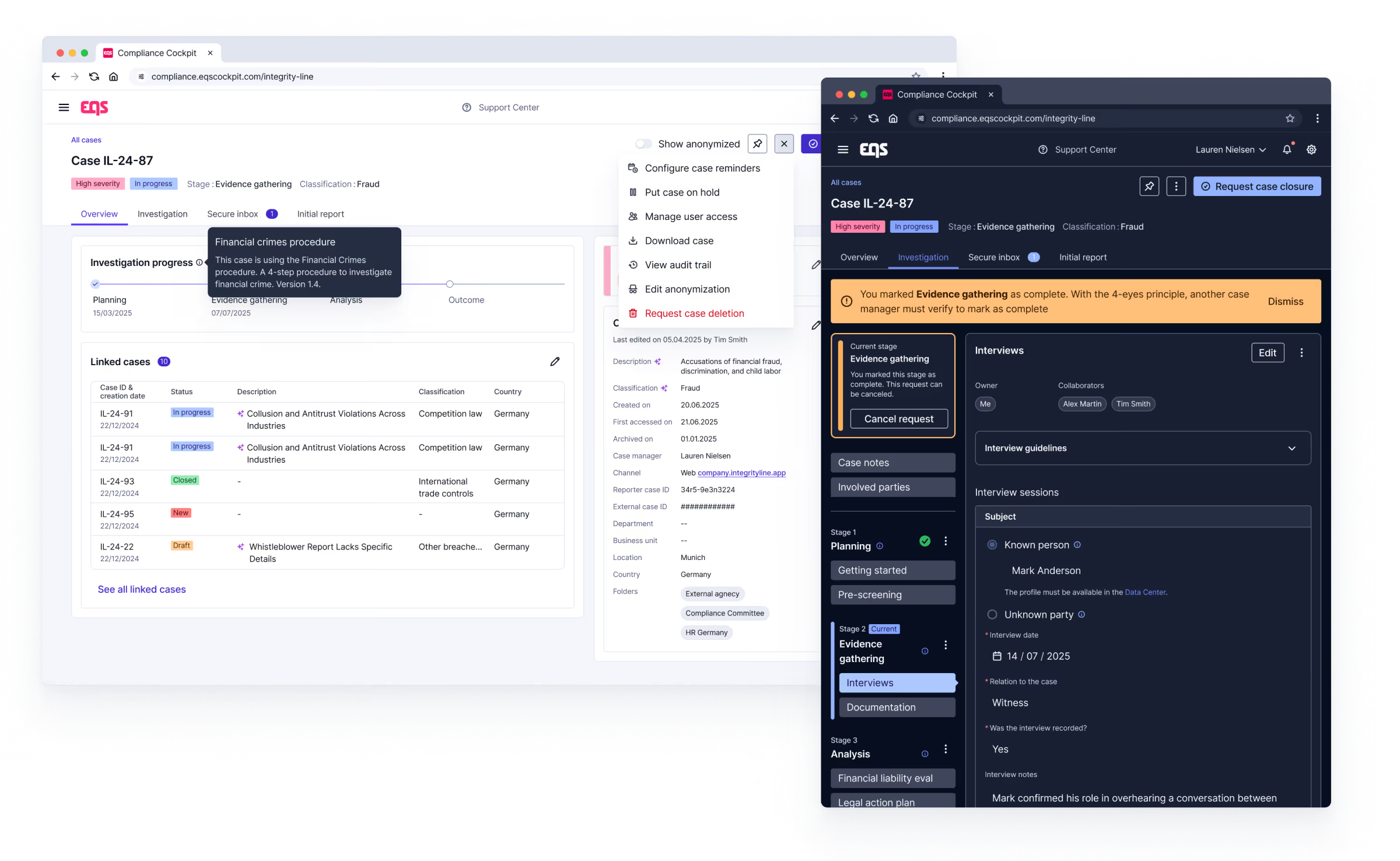
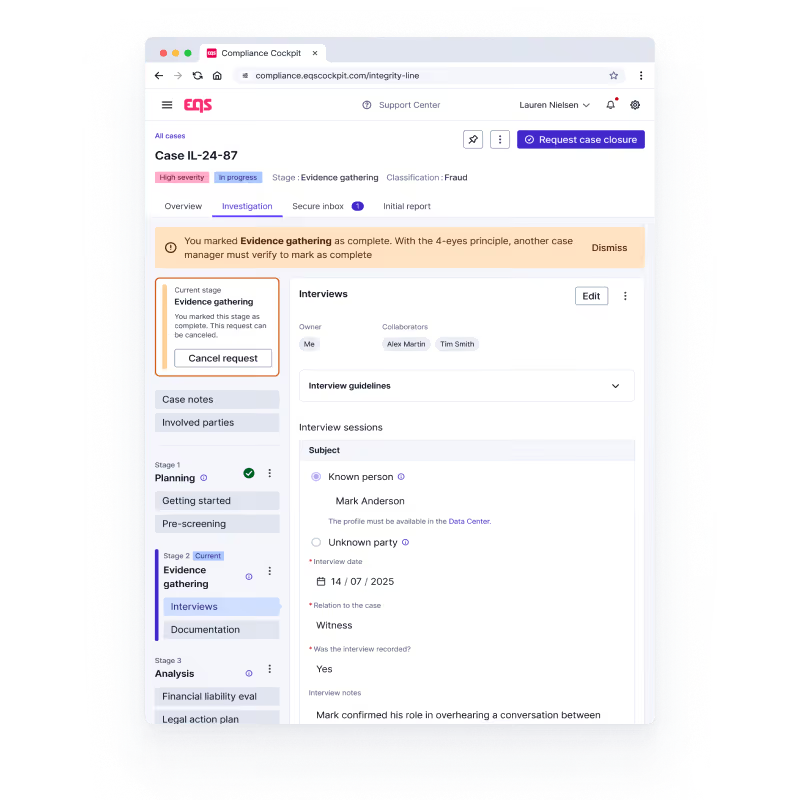
Before (left) and after (right), currently in production, showcasing major visual design changes to the case detail view.
Before our new concept, our whistleblowing case detail page simply could not scale for the future of the product, and the visual design lacked craft excellence and quality. Throughout our iterations and workshops, we were able to imagine a new content organization and navigation within a case. The design we landed on enables us to scale into and beyond highly complex enterprise customer features, introducing a better content organization, more curated spaces for certain investigation activities, and a much higher quality design.
This work was truly the first fully collaboratively created product vision between design, engineering and product management. The outcome of this work was not only a tangible vision, but a tangible example of a way of working for the organization.


